Showing posts with label Verizon Wireless. Show all posts

Monday, June 27, 2011

Verizon and the pain of capped data

As of July 7 of this year Verizon Wireless will no longer offer unlimited data plans for smartphone users. Instead users will receive 2GB of data for the same price they were previously able to get unlimited. The change doesn't come as a surprise since AT&T made the same move 1 year and 1 month ago to the day.

AT&T customers have learned to cope with the plans but Verizon customers won't have the same offerings to help ease the pain. AT&T's offering gave 2GB at $25 and for those that truly used less data could go as low as $15 a month. Verizon starts at $30 and goes up from there.

Data plans:
2GB - $30/month
5GB - $50/month
10GB - $80/month
Tethering can be added to any plan, you can purchase 2GB of data at an additional cost of $20 per month.

Data plans w/ tethering:
4GB - $50/month
7GB - $70/month
12GB - $100/month
If you go over your purchased amount of data, it will cost you $10 per 1GB.

The one saving grace which has yet to be revealed (also yet to be confirmed) is the ability to share data. In my own personal situation this would help out greatly since I am the data hog and my wife does very little billable with hers coming in over the home wifi. I would come out ahead since currently I'm paying $60 in data, together we may total 5GB a month, in sharing I would only pay $50.

Verizon's approach to new family share plans is interesting. Rather than putting each line on a plan such as a $60 Primary Share and $9.99 Secondary Share, the new process will be separating the two. It's called Account Level billing and just as the name suggests the price plan will be associated with the account and not each line. If the data package is also on the account level then two lines would have the ability to share one 2GB plan.

Regardless of whether it's better or not, the transition will be confusing and annoying to the customer. Trying to talk about amounts of data on a broad band access card to a customer is already challenging since it's so objective. AT&T however has proved in a year that boxing in customers into restrictive plans won't be enough to make them leave.

Monday, June 13, 2011

Is AT&T buying T-mobile making it a monopoly?

AT&T is currently pursuing approval of the acquisition of T-Mobile, the smallest of the 4 nationwide cellular carriers. It's becoming a heated topic in the telecom world gaining more opponents and supporters. In defending the deal AT&T is trying more and more tactics as Consumer Reports reported that AT&T thinks that less competition means lower prices.

AT&T's newest argument is that T-Mobile is quickly becoming irrelevant so the purchase of the fledgling company will hardly change the competitive landscape. When it comes to the nationwide carriers there are two types of technology that is used, GSM and CDMA. With a successful purchase of T-Mobile there will be only one GSM option, AT&T

Becoming the only GSM provider will this be enough to consider AT&T a monopoly?

There is the current debate in Washington on whether or not the purchase will at the very least create a duopoly. This of course considers Sprint as irrelevant making Verizon and AT&T the only two viable options. The question is though how much choice do customers need and what level of competition will keep prices at reasonable levels.

AT&T says that consolidation will create efficiencies thus keeping costs of operations at bay. The problem I have with that logic is Sprint/ Nextel, Cingular/ Suncom, Cingular/ AT&T, and Verizon/ Alltel. Any merger has it's own set of problems and at the very best has only a moderate amount of issues.

In a Fierce Wireless story AT&T rebutted it's most vocal oppent, Sprint by saying "To hear the opponents tell it, T-Mobile USA--with approximately 11 percent of subscribers nationwide, steadily declining market share, and no clear path to LTE--is all that stands between today's 'era of competition and growth' and 'an entrenched, anti-competitive duopoly.' (Quoting Sprint's filing) is implausible, to say the least,"

I agree that the writing is on the wall for T-Mobile, losing 99,000 subscribers in their first quarter this year is a very bad omen.

But buying T-Mobile is not the caveat to an anti-competitive climate but the continuation of one. Wireless subscribers face very little choice when looking at a nationwide provider. Most of the time the pricing structure is the same and varies little in the amount of minutes received.

Another frustrating aspect of the wireless industry is the "Lemming Effect." When one carrier increases the price or takes away what a customer gets then the others follow suit. Recently Verizon Wireless eliminated their 1 year contracts because their biggest competitor, AT&T, hasn't offered 1 years for quite some time.

T-Mobile hasn't been a true competitor but it has been a representation of what this industry needs which is an economy carrier. The hurdle for a discount provider is coverage, what every mobile subscriber wants. If a carrier can't be profitable then it can't reinvest in it's network which was a deathblow to T-Mobile since they have no hope of upgrading to LTE or 4G if you prefer.

Sprint is in a weird gray zone, they're not really a discount carrier but then again they're not a premium one either. Dan Hesse has done an amazing turn around job with Sprint but now it's gotten trapped in a vortex of multiple strategies. If Sprint decides to take hold of the discount position then they could own that space as T-Mobile leaves a void. Sprint doesn't have the greatest network but they do have one that with the right pricing structure could continue to nip at Verizon and AT&T's subscriber base.

But that's it! We're now talking about just three providers, 2 of which are almost identical except one has lousy service. So what's left?

For the carrier that got booed off stage at E3 when they were announced as the exclusive wireless provider for the newest portable playstation device, they will probably be able to buy their way into the largest carrier spot. Verizon and Sprint will acquire the ticked off T-Mobile customers who will refuse AT&T.

And the one big loser in this anti-competitive climate will be the wireless customer.

Thursday, June 9, 2011

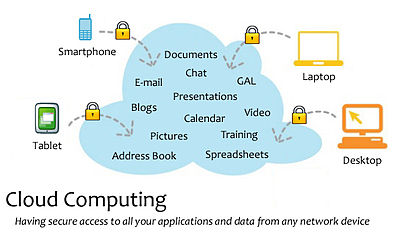
Is the Cloud here to stay?

Have you ever been talking to someone about cloud computing and they take hold of the conversation by saying it won't last?

It has happened to me quite a few times, once was even by a very intelligent friend of mine whose opinion I highly respect. The conversation always seems to be transitioned by the statement "I don't know about the cloud," followed by a litany of obstacles that will keep it from gaining the momentum needed to sustain it as a viable business solution. There are security issues, connectivity issues, trust issues, and the list goes on. It is very easy to get sucked into defending every aspect of the cloud and before you know it you're no longer talking about the importance of the cloud.

The fact of the matter is that the cloud continues to build momentum and already has a strong foundation. It is a self-fueling fire that as it facilitates growth will in return be required for new technologies.

The need of the cloud is becoming more apparent and the need is also fueling the innovation that comes with a well established cloud.

Most people in IT understand what the cloud is about. At it's core is the internet but it gets deeper than that and I'm not talking about network virtualization or anything else that references to the complexity of the cloud.

At the true heart of the cloud is disintermediation. Disintermediation is essentially removing the middle man and as you remove the middle man things become more efficient and faster. So in the world of information at the speed of the thought, disintermediation is the natural process that the cloud produces therefore it is only inevitable that one produces the other.

For those that have doubts on the cloud I ask to look at where we were 20 years ago with the internet then at  10 years and look at it now.

Please help support All About IT and More by clicking on one of our ads. It only takes a few seconds and helps us out tremendously!

Sunday, May 29, 2011

Why you shouldn't buy the Samsung Droid Charge

There's a lot of exciting things happening in the world of Android right now. We have phones that will soon be coming out with Near Field Communication (NFC) technology so you can buy a soda with a pass of your phone. The Nexus has come to Sprint which means that it has CDMA technology which gives me hope that it could come to Verizon soon. We currently have multiple phones that will be able to run on 4G which is the next generation of wireless high speed data.

So why is it that a lackluster phone costs $299? Yes, the Charge has 4G capability but so does the LG Revolution and the HTC Thunderbolt but you don't see them asking for an arm and a leg! Since there's really nothing that sets it apart from the two fore mentioned phones the $299 forces me to look at all of the negatives.

It lacks a dual-core processor which is starting to be a standard on new devices. Even on a reasonably priced device I would want one of these chip sets. They are really only effective on Gingerbread and above but still you're phone is going to become obsolete faster without one.

It comes shipped with Froyo and not Gingerbread. It may be a little too soon to be expecting Gingerbread pre-installed but this is a huge sore spot for me with Samsung. It is up to the manufacturers to update the software on their devices and Samsung recently blocked updates to their user's phone to try and finagle money out of the carriers. This was just a poor move on their part, they didn't get any extra fees and the customers were the ones being hurt.

Another sore spot for me is "bloat-ware." Bloat-ware is software that comes pre-installed on the phone and cannot be deleted. What is really frustrating is that this crap is marketed as benefits of going with the device but in the end is only reason to stay away.Unfortunately bloat-ware is on every phone but with the Charge I couldn't help but feel that there was an above average amount of bloat-ware. One of the included apps is a video service app but rather than building one from the ground up they should just focus on getting Netflix and Hulu on the device.

The Droid Charge is Samsung's first LTE phone for Verizon but a long list of drawbacks makes one laugh at the $299 price tag. Samsung's poor track record in the world of Android, inclusion of many unwanted and uninstallable apps, and lack of a dual-core processor are just some of the reasons not to buy the device. There are currently much better choices and even more phones will be coming out this summer so don't even give this phone the time of day.

Please support the site! Click on one of the ads, it only takes a second.

TechCrunch